What are large format tiles used for? This question reaches beyond simple decoration. These oversized surfaces can reshape kitchens, bathrooms, hotel lobbies, retail walls, and open-plan living areas. Their broad dimensions create fewer grout lines. The result can feel calmer, cleaner, and visually larger.
Large format tiles are often used for floors, shower walls, kitchen backsplashes, fireplace surrounds, and exterior façades. Some porcelain slabs also imitate marble, concrete, wood, or natural stone. A single panel can span a dramatic wall behind a bathtub. It can also cover a countertop with fewer visible joints. Practical benefits matter too. Fewer grout lines may simplify routine cleaning, although grout maintenance does not disappear.
Tile industry educator Bart Bettiga, executive director of the National Tile Contractors Association, has stated, “Large-format tile demands proper planning, handling, and installation.” That warning deserves attention. These tiles are heavy and less forgiving than small formats. Installers must check substrate flatness, select suitable mortar, and use appropriate lifting equipment. Poor preparation can cause lippage, cracks, or weak adhesion.
The best application depends on the room, tile thickness, surface condition, and installer experience. Bigger is not always better. A narrow bathroom may need careful joint alignment around corners, drains, and plumbing fixtures. A beautiful slab can still fail when rushed. This guide examines where large format tiles work best, what installation demands, and which design choices remain practical for everyday spaces.
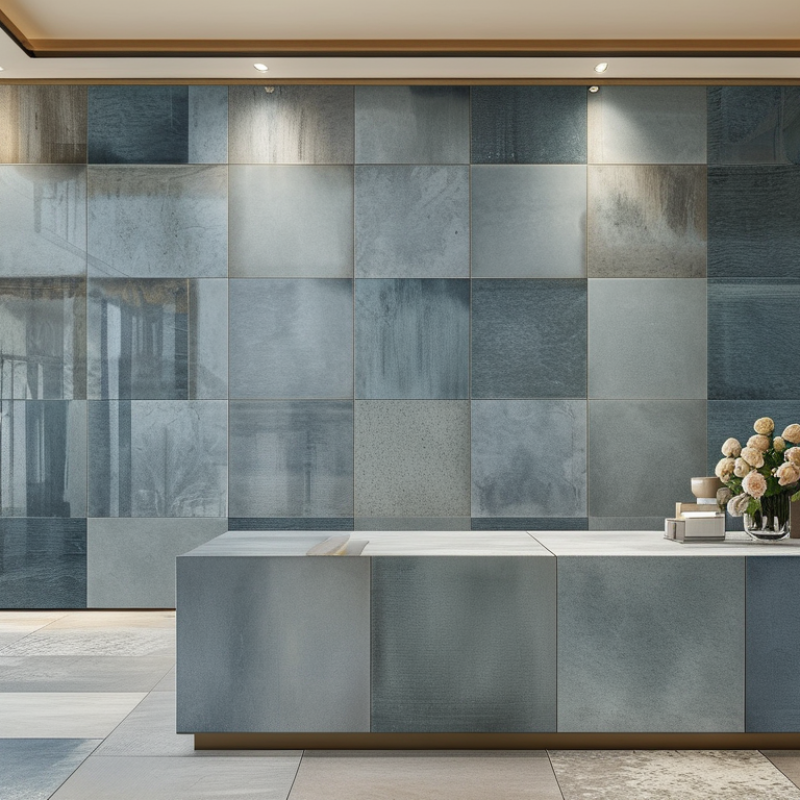
Large format tiles are oversized ceramic or porcelain surfaces used on floors, walls, countertops, and shower areas. The term is not perfectly standardized. It usually describes tiles with at least one edge longer than 60 centimetres. Some products extend beyond 120 centimetres, creating a slab-like appearance with fewer joints.
Their main features include broad dimensions, consistent thickness, low water absorption, and reduced grout lines. Fewer joints can make a room look calmer and easier to clean. They also help create continuous visual patterns across kitchen backsplashes, hotel walls, and open-plan floors. Careful surface planning matters, because a small colour or texture variation becomes more visible across a large tile.
Installation requires experience. Large tiles are heavier and less flexible than standard formats. Uneven substrates may cause hollow spots, lippage, or cracking over time. Professional installers often use levelling systems, suitable adhesives, and two-person lifting methods. The final result depends on more than tile quality. Cutting accuracy, room access, and joint layout can change the appearance significantly. In practice, large format tiles are impressive, but they are not always the easiest choice. A smaller tile may perform better in a narrow or irregular space.
| Data Dimension | Typical Information | Why It Matters |
|---|---|---|
| Definition | Large format tiles are tiles with substantially larger surface dimensions than standard modular tiles. A commonly used description is a tile with at least one side measuring about 60 cm or more, although definitions vary by market and standard. | The larger surface creates a cleaner visual appearance with fewer grout joints. |
| Common Sizes | Typical formats include 60 × 120 cm, 75 × 150 cm, 90 × 90 cm, 120 × 120 cm, and slab-style panels exceeding 120 cm in one dimension. | Size selection should match the room scale, access route, substrate, and handling capacity. |
| Primary Materials | Large format products are commonly made from porcelain or ceramic materials. Porcelain is generally denser and has lower water absorption than ordinary ceramic tile. | Material properties influence durability, moisture resistance, cutting requirements, and suitable applications. |
| Residential Floor Applications | Open-plan living rooms, kitchens, dining areas, hallways, entryways, bedrooms, and home offices. | Large modules can make connected areas appear more spacious and reduce the number of visible joints. |
| Wall Applications | Bathroom walls, shower surrounds, kitchen backsplashes, fireplace surrounds, feature walls, and interior partitions. | Fewer grout lines can simplify visual maintenance and create a continuous stone-, concrete-, or marble-look surface. |
| Commercial Applications | Hotel lobbies, restaurants, retail interiors, offices, showrooms, public corridors, and reception areas. | The format supports minimalist designs and can reduce grout maintenance in large, highly visible spaces. |
| Exterior Applications | Exterior walls, covered terraces, balconies, façades, and some outdoor floors when the product is specifically rated for the intended conditions. | Outdoor use requires attention to frost resistance, slip resistance, drainage, thermal movement, and local installation requirements. |
| Visual Effect | Creates broad uninterrupted fields with fewer grout lines and can visually enlarge compact rooms. | The final appearance depends on layout, grout color, edge alignment, lighting, and substrate flatness. |
| Common Surface Finishes | Matt, polished, honed, textured, structured, and anti-slip finishes. | Finish affects appearance, cleaning, light reflection, and traction under wet or outdoor conditions. |
| Grout Joint Considerations | Large format tiles still require joints. The joint width depends on tile calibration, rectification, installation conditions, movement requirements, and applicable standards. | Joints accommodate dimensional variation and movement; tiles should not normally be installed edge-to-edge. |
| Substrate Requirements | The base must be clean, stable, dry where required, and sufficiently flat. Large tiles are less tolerant of uneven substrates than small tiles. | Insufficient flatness can lead to lippage, weak adhesive coverage, cracking, or voids beneath the tile. |
| Installation Method | Installation commonly requires suitable large-format tile adhesive, careful back-buttering or combined application, alignment systems where appropriate, and proper movement joints. | Adequate adhesive coverage helps limit unsupported areas and improves long-term performance. |
| Handling Requirements | Large pieces may require two or more installers, suction-cup lifters, frame systems, special racks, and protected transport. | Proper handling reduces the risk of bending stress, edge damage, breakage, and installation injury. |
| Cutting and Drilling | Wet saws, score-and-snap tools designed for large tiles, diamond blades, and suitable diamond hole saws may be needed. | Accurate cutting is important because large pieces make layout errors and damaged edges more noticeable. |
| Main Advantages and Limitations | Advantages include fewer grout lines, strong visual continuity, and efficient coverage of large areas. Limitations include higher handling demands, more demanding substrate preparation, specialized cutting, and greater consequences when a tile is damaged. | The best choice depends on design goals, room dimensions, installation expertise, access conditions, and maintenance expectations. |
They suit open-plan living rooms, kitchens, bathrooms, entryways, shower walls, and fireplace surrounds. A 1200-by-600-millimeter tile can connect a backsplash with an island wall. That connection feels deliberate. Still, grout lines require cleaning near sinks and showers.
Their broad surfaces create fewer grout lines. Rooms may look calmer and wider. A continuous layout can visually connect the kitchen, hallway, and living area. The effect is attractive, but lighting and room shape still matter.
They work in lobbies, restaurants, offices, showrooms, and retail corridors. Large panels can cover reception desks or restroom walls. They reduce visual interruptions across broad areas. However, durability and maintenance should guide the choice.
Fewer joints give dirt fewer places to collect. Cleaning may become simpler. Not maintenance-free. Grout still needs attention, especially in wet areas. A polished surface can also show marks more clearly.
Uneven floors can create lippage, with visible height differences between tiles. Poor adhesive coverage may cause cracking or weak support. Rushed handling can damage corners. The hidden preparation matters most.
An experienced installer should check the substrate with a straightedge. The surface must be exceptionally flat and stable. Small height changes can become obvious across large tiles. This check is easy to overlook.
They are heavier and less forgiving than smaller tiles. Two trained installers may be needed for a heavy panel. Cutting around drains, outlets, and pipes demands careful measurements. One missed opening can waste an expensive piece.
Measure the room carefully and confirm the tile quantity. Check water absorption, slip resistance, abrasion rating, and moisture exposure. Plan movement joints near large openings and heated floors. Keep spare tiles for future repairs. The largest tile is not always the best choice.
Large format tiles are oversized ceramic, porcelain, or natural stone surfaces designed to create a clean, spacious appearance with fewer grout lines. Their size, strength, low water absorption, and flexible finishes make them suitable for many design purposes. If you are asking, “what are large format tiles used for,” common answers include floors, walls, shower areas, kitchen backsplashes, countertops, fireplace surrounds, office interiors, retail spaces, hotels, and other commercial environments. They can help make rooms look more open while providing a durable and easy-to-clean surface.
These tiles may be installed on floors, walls, ceilings, or carefully prepared vertical and horizontal surfaces, depending on their material and thickness. Successful installation requires accurate measurements, a stable substrate, suitable adhesives, proper handling equipment, and careful alignment to reduce lippage or cracking. Before installation, planners should consider room dimensions, transitions, drainage, movement joints, and access for future repairs. Routine maintenance is generally simple: remove dust and spills promptly, use appropriate cleaners, and inspect grout and joints periodically.

 Rock Stone